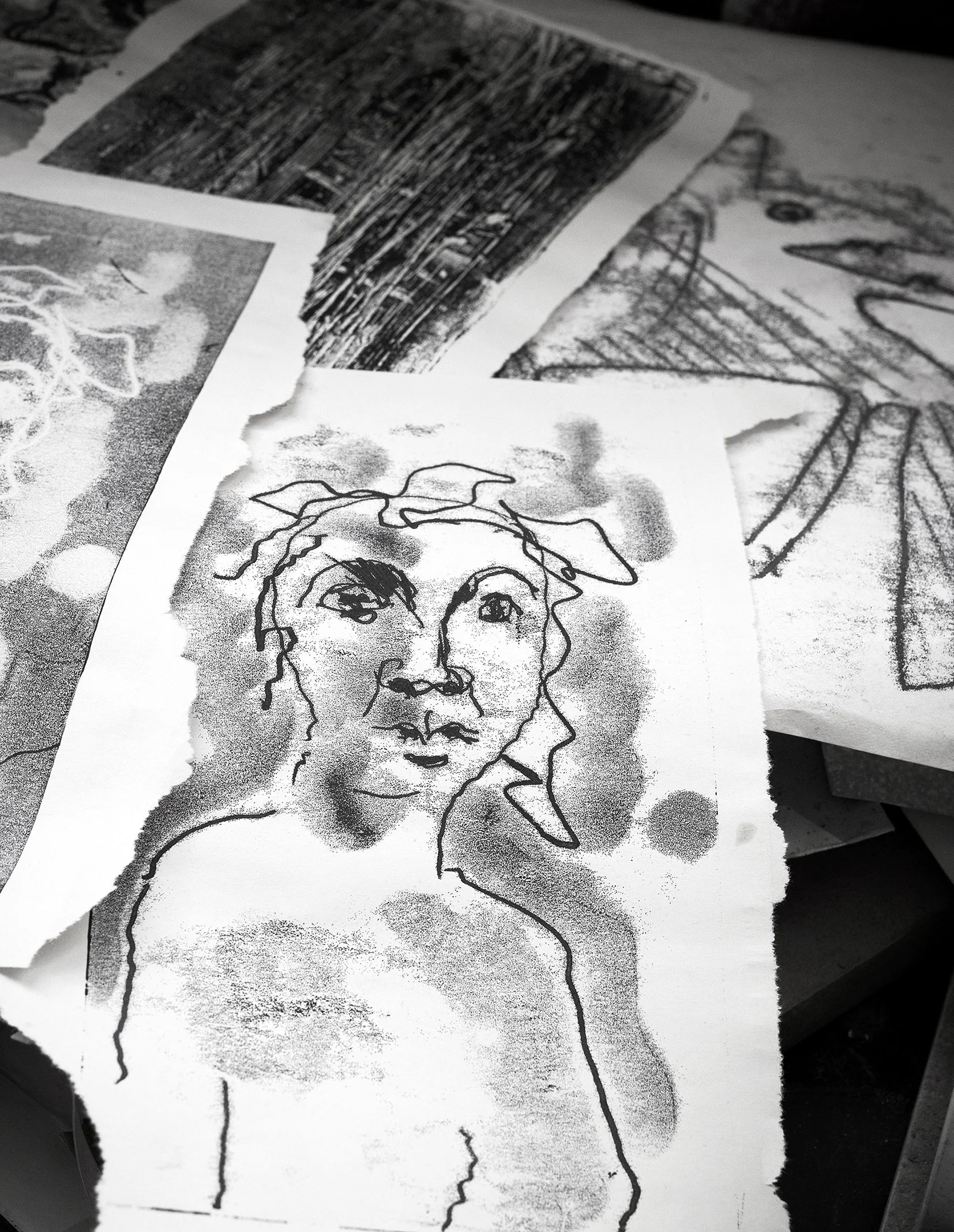
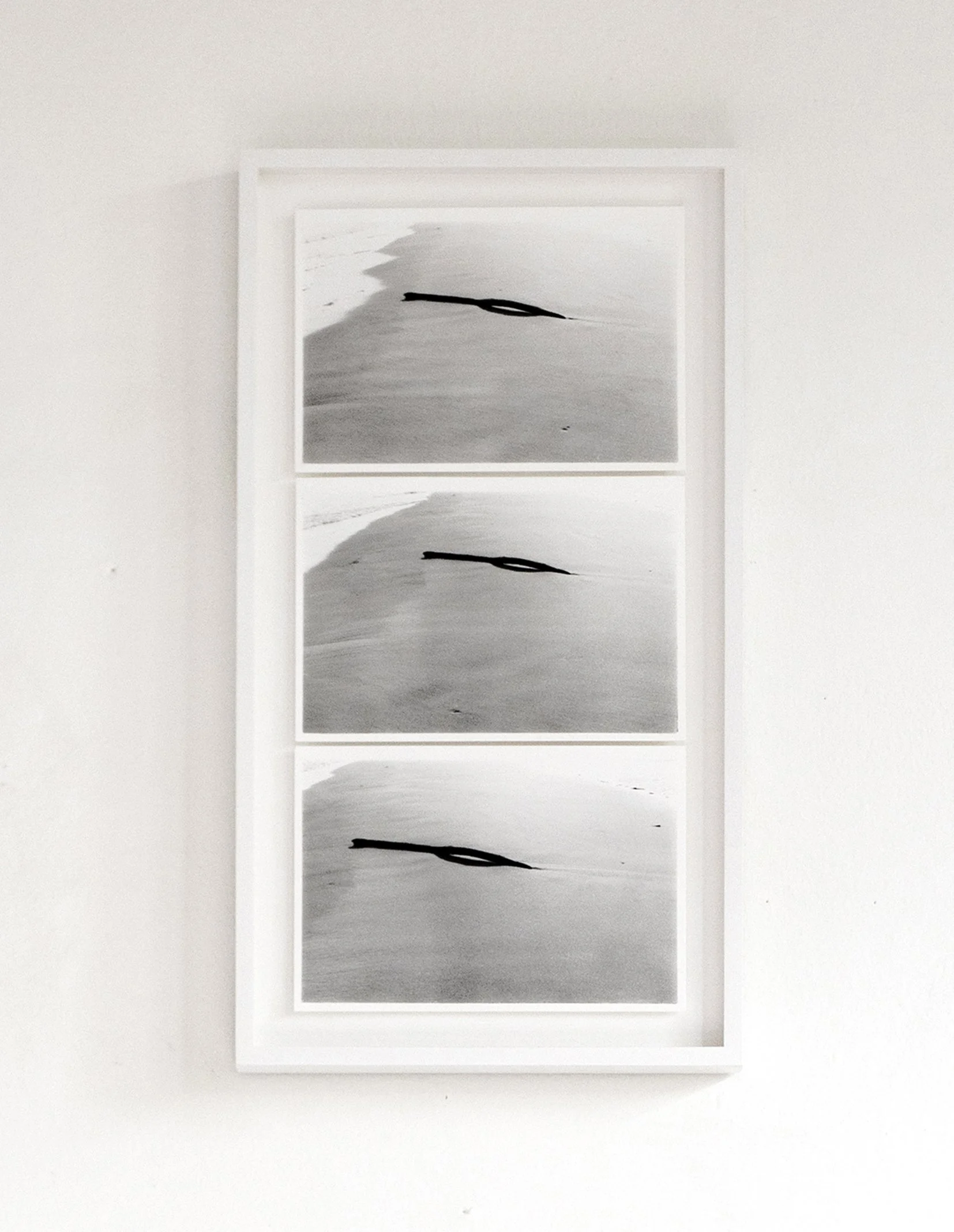
substance = light 2025
photogram + pigment print on cotton paper 195 x 150 cm
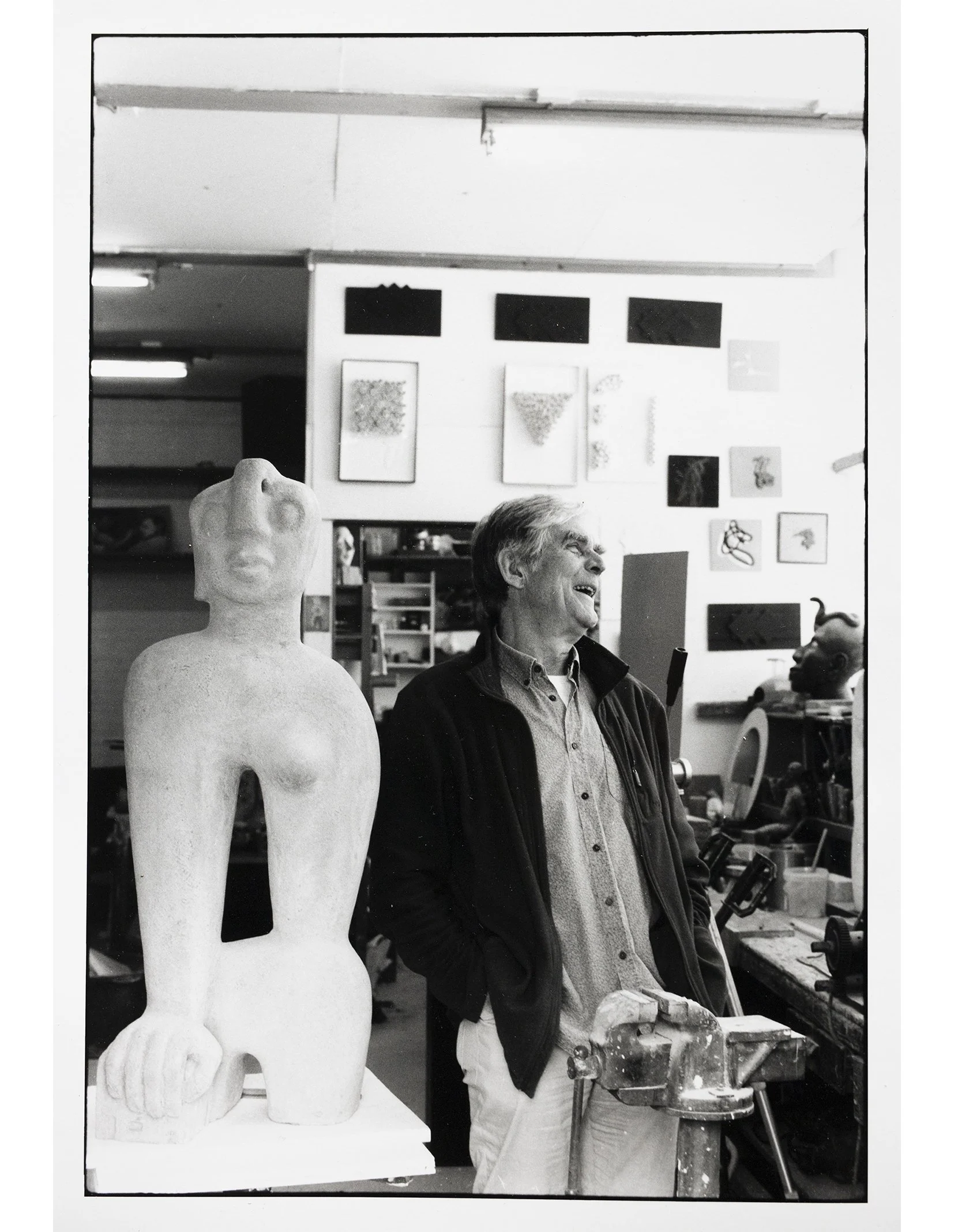
When I emptied my father’s studio after his death, next to many of his sculptures I found an unusual stone. Slightly smaller than an ordinary brick. Had he made this stone? Why the word ZIJN (to be)?
This stone continued to fascinate me and I placed it on light-sensitive paper in sunlight, to see what time and light would manifest. A concrete form became abstraction, substance became light.

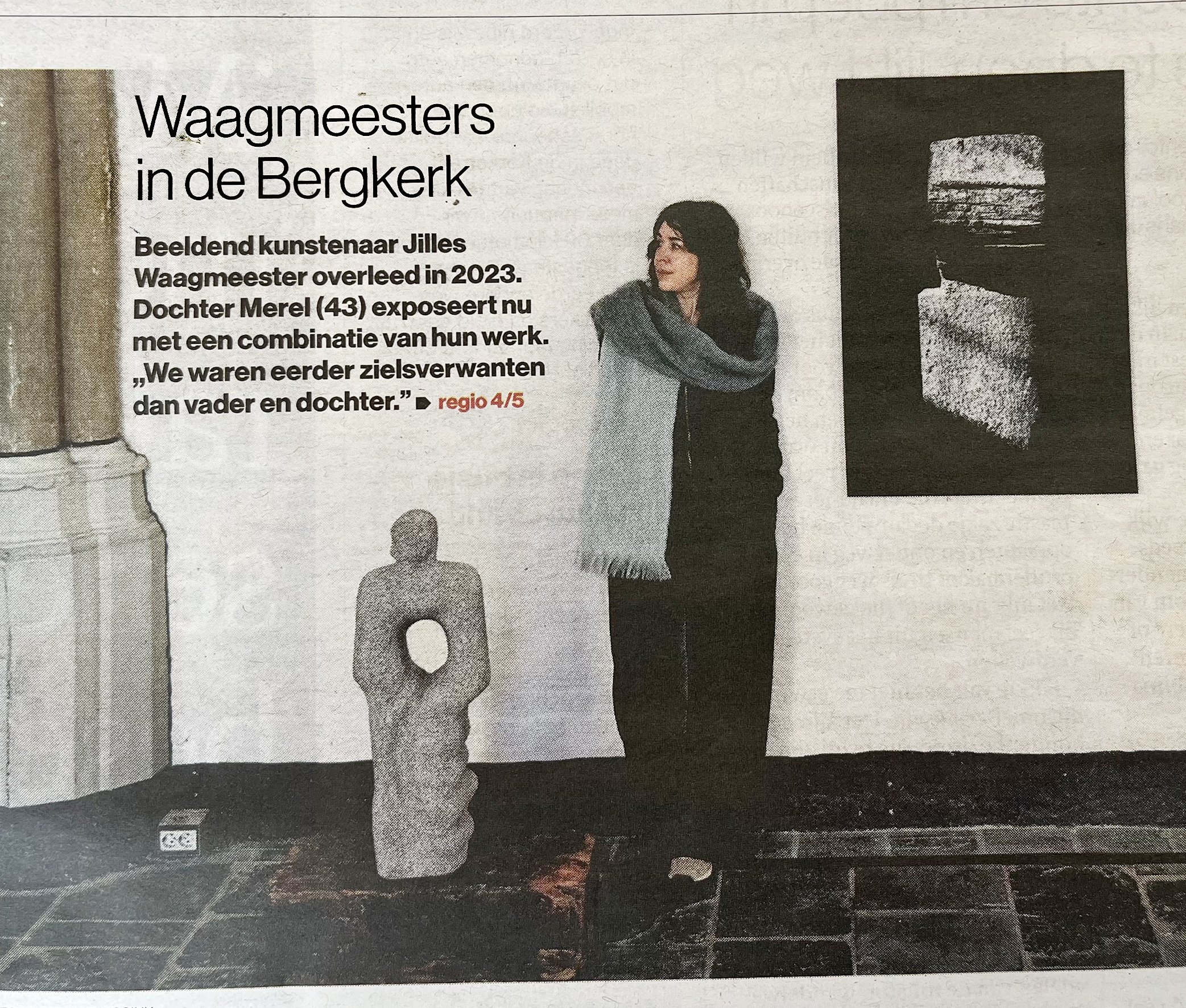
Homage to my father / February 2025 Bergkerk Deventer
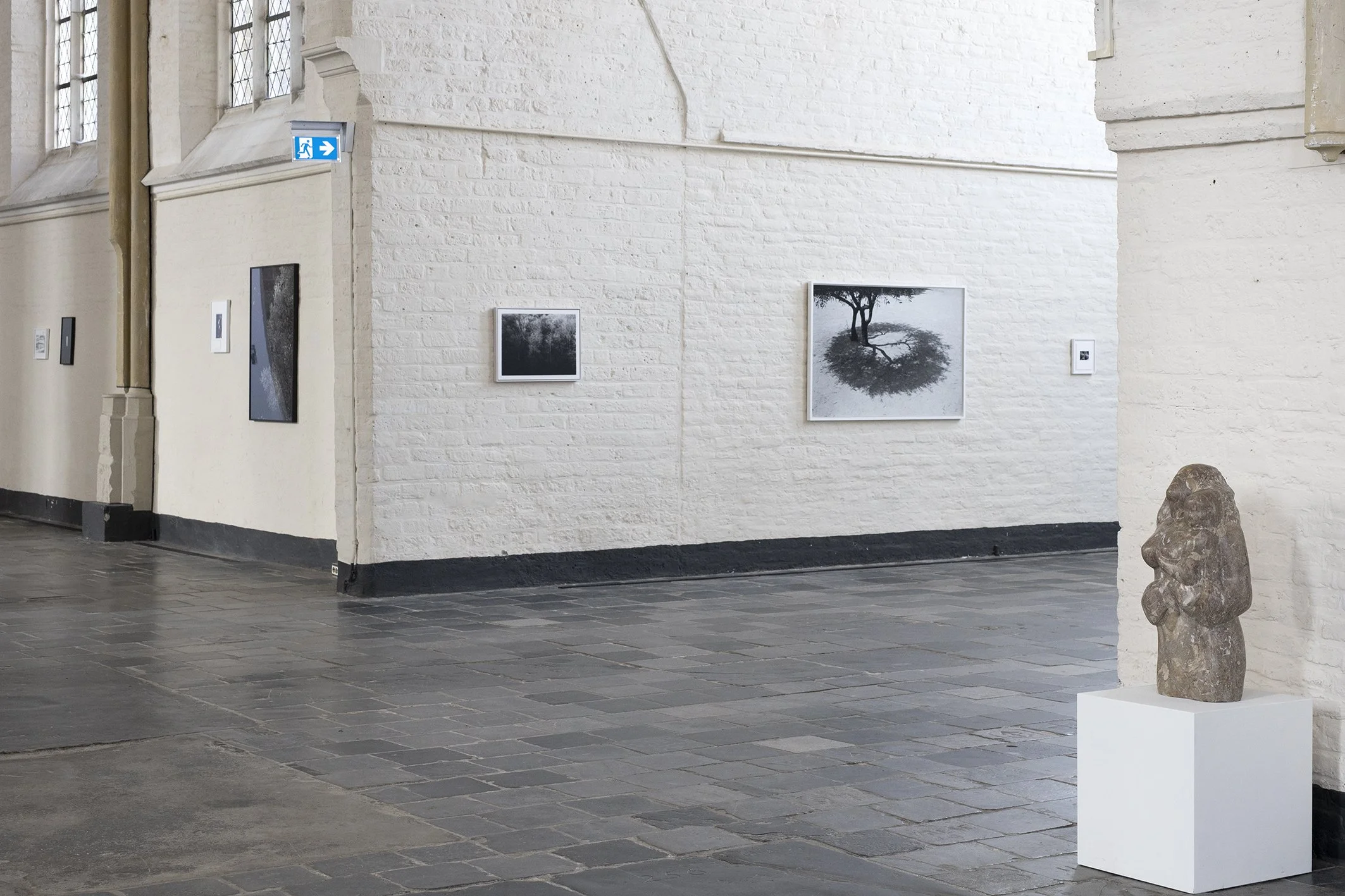

DE SFEER VAN HET MIDDEN / THE AMBIENCE OF THE IN-BETWEEN
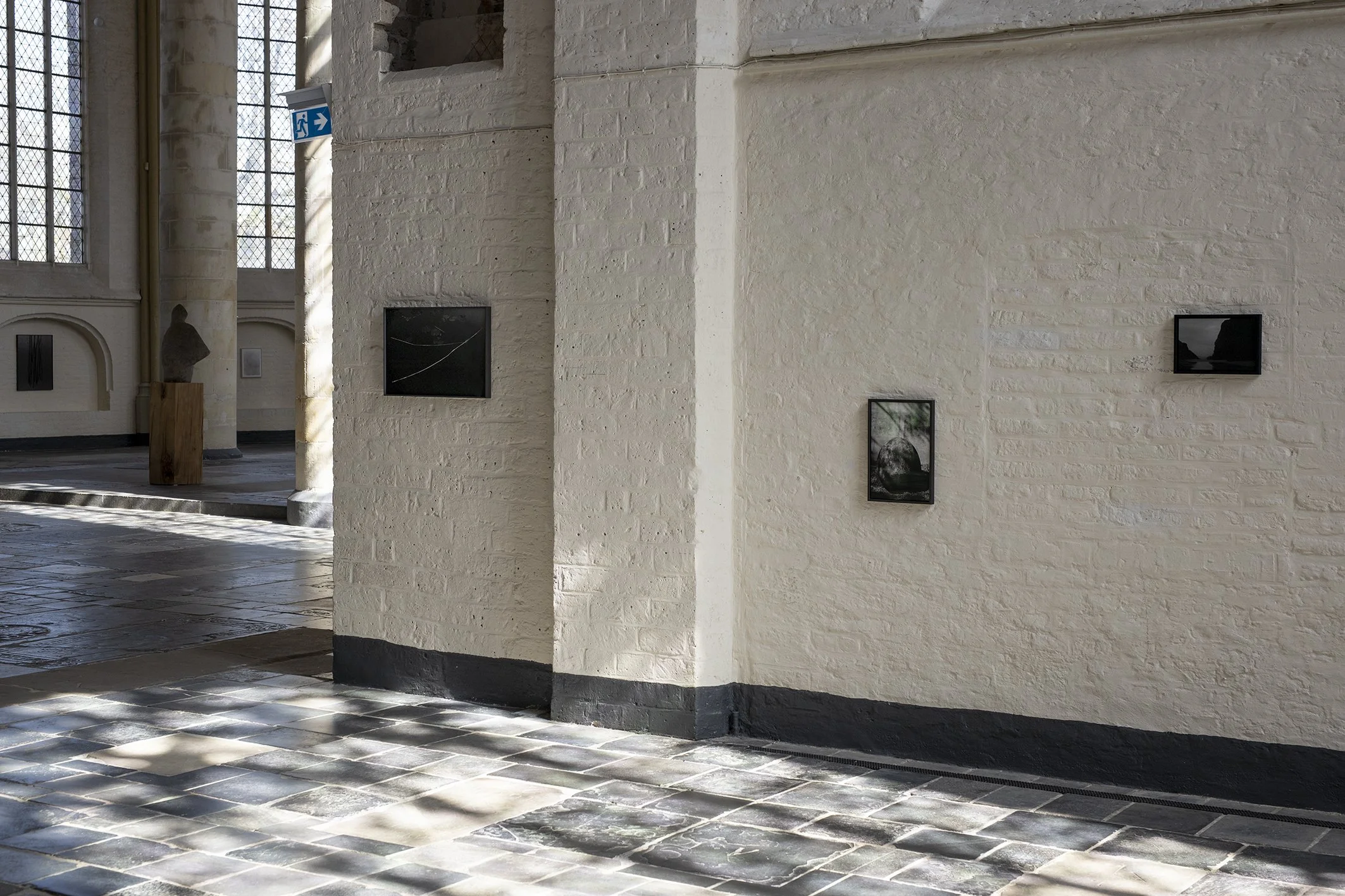
Exhibition BERGKERK 2025
opening - with philosopher Jan Bor
finissage - with philosophers Hein van Dongen en Welmoed Vlieger


Text in Dutch below
A gaze that reaches far beyond the horizon
Reflections on the exhibition The ambience of the In-Between.
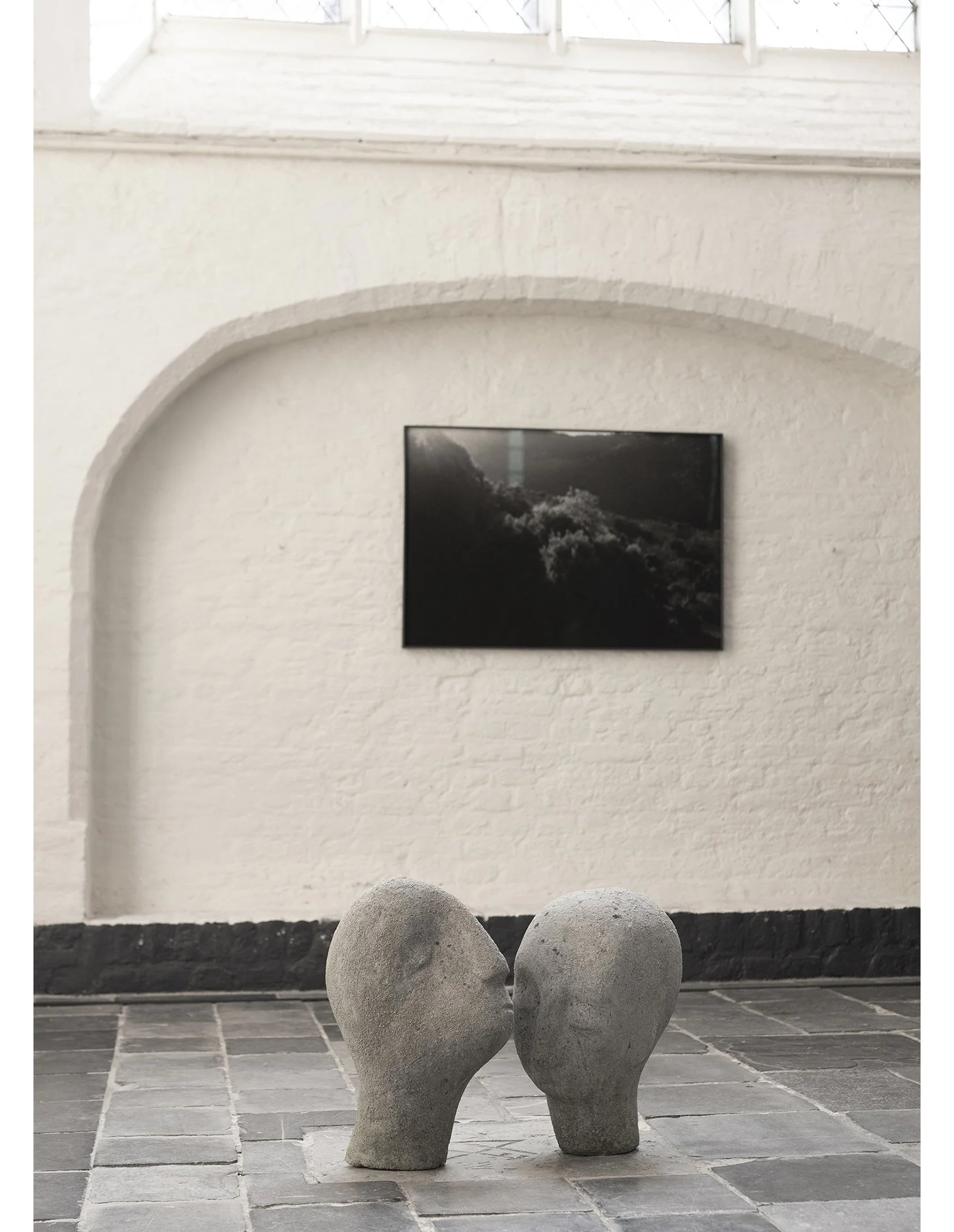
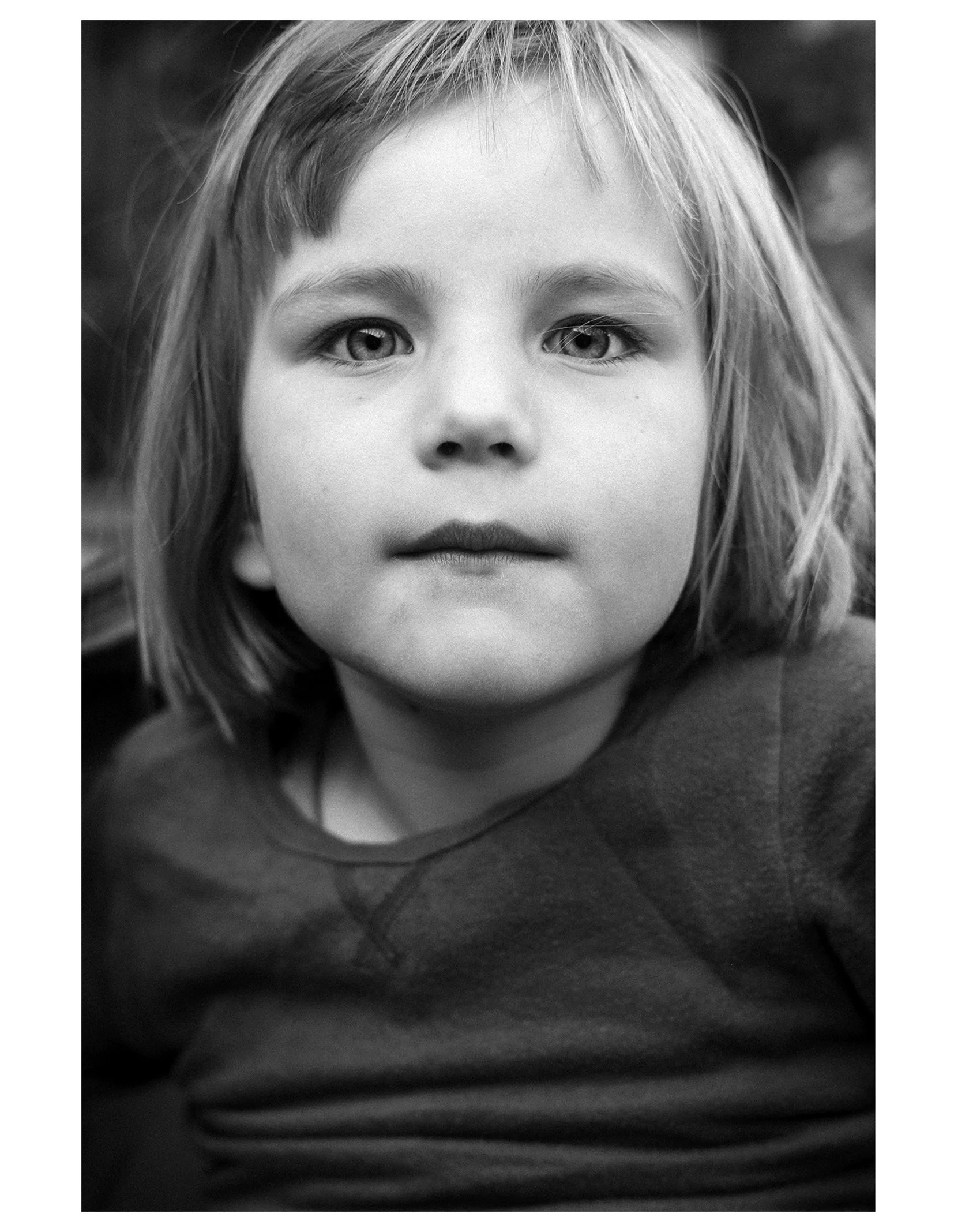
Photography by Merel Waagmeester and sculptures by Jilles Waagmeester
By Peter Paul Hattinga Verschure
At what point does a photograph conveys a different image than what it portraits?
Isn’t a photo like a horizon: the boundary between the world we can see and the invisible world beyond, that of longing and imagination?
These fascinating questions came to me as I examined at the work of Merel Waagmeester at her exhibition in the Bergkerk in Deventer. It was a bright and quiet day. Sunbeams slanted through the Gothic church windows.
Her work is photography, but what Merel does with it surpasses the usual repertoire I’ve come to expect from the medium.
I look at images of seemingly random and casual subjects, but that’s not really what I’m seeing. I sense that I’m seeing through the eyes of someone who perceives abstract dimensions within things and places.
In Merel’s photographs, liberated from colour, it’s precisely this casualness that I see transformed into a mystical atmosphere of seeing, imagining, and knowing: knowing in the sense of an essential ‘being’, with all its feelings, doubts, questions, and individual meanings - and a longing towards those. The casual is simultaneously present and absent.
Is everything coincidence, or is nothing coincidence?
Somewhere along those lines we enter the mystical realm. Form and technique are the carriers of this atmosphere. They are its visible exterior. You see subtle textures of the prints on baryta paper, Kozo paper, cotton paper, and how these materials affect the image. And the framing completes the work perfectly, without distracting.
I feel a paradox here: the observable technique is essential to make the unseen visible.
That effect strikes me all the more because the depictions in the photos are so ordinarily familiar, with emphasis on both these words. And yet they are represented in a way that only Merel could have perceived.
The miraculous to me is that in these earthly guises, she found the formula to reach that abstract layer.
I experience Merel’s photography as a form of absolute art, where questions of beauty, or even of technique, fade into the background. She shows it is intentional: it must either exist in this form, or not at all. No material or aesthetic concessions - any concession would limit the perception of its layered meaning.
Colour would be too much of a descriptive element in the images. Colour would distract. It is precisely the colourless image from which the work derives its quiet significance.
The presented work is a result of searching for the unspeakable within things, not the, but a result. Of this moment.
It reminds me of Sol LeWitt’s quote: “If a work of art is made there are many variations that are not made. These may be as important.” Merel’s work is what it needs to be, here and now.
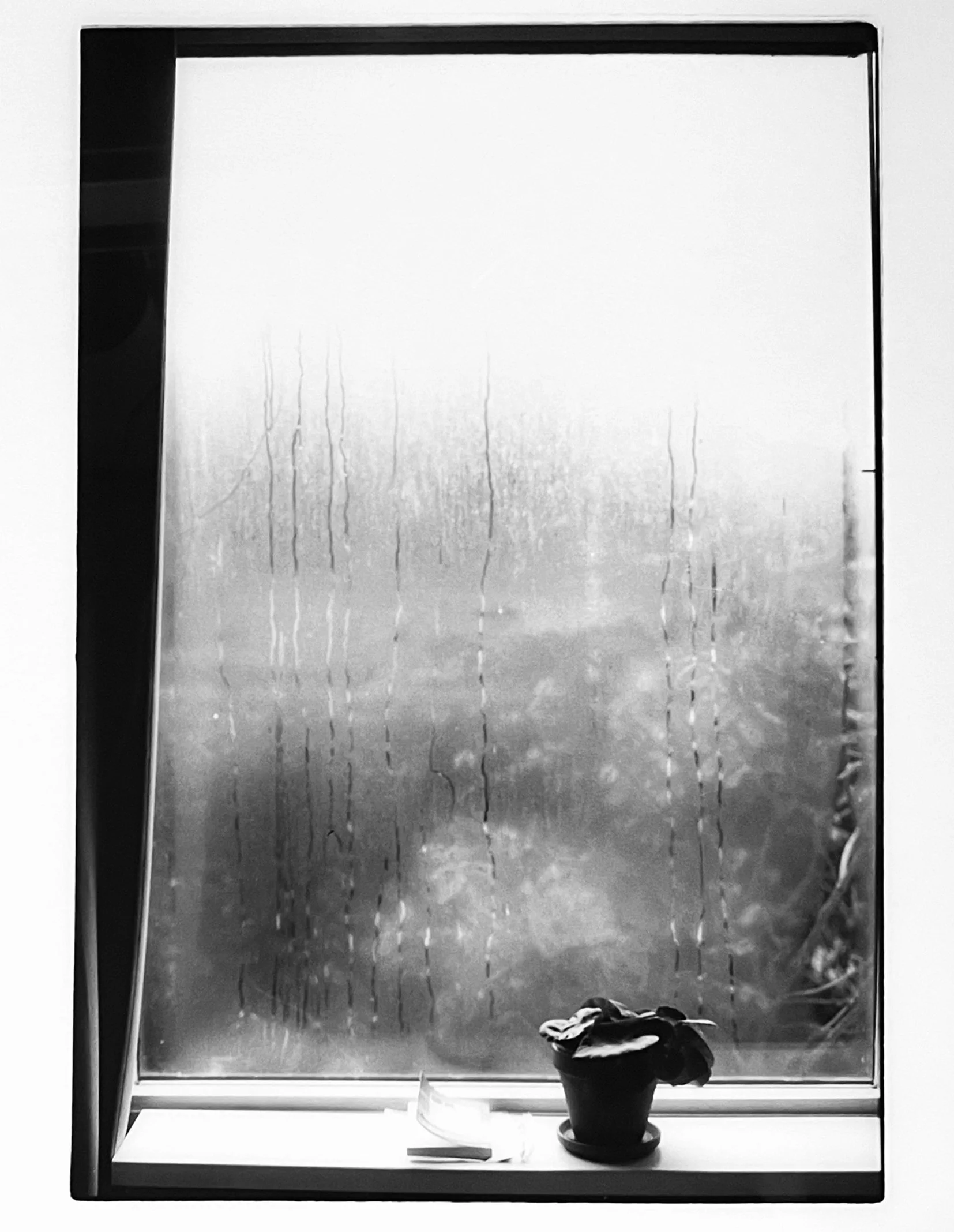
Actually, I find Merel’s work too poetic to be described in such a contemplative manner. I recognize her work, and the intention it reflects, most fully in her poem “where things have no weight…”
And suddenly, there you stand face to face with another paradox: the massive sculptures by Jilles, which with their physical gravity, refer to that atmosphere where things have no weight.
The utter earthly sculptures beside the ethereal photography… I recognize the shared view of Jilles and Merel: a gaze that reaches far beyond the horizon.
Peter Paul Hattinga Verschure, Deventer februari 2025
-
Een blik tot ver achter de horizon - over de tentoonstelling De sfeer van het midden
fotografie van Merel Waagmeester en sculpturen van Jilles Waagmeester
door Peter Paul Hattinga Verschure, februari 2025
Vanaf wanneer vertelt een foto iets anders dan wat je er op ziet?
Is een foto dan niet als een horizon: de grens tussen de wereld die we kunnen zien en de onzichtbare wereld erachter, die van verbeelding en verlangen?
Die vragen kwamen bij mij op toen ik het werk van Merel Waagmeester zag op haar tentoonstelling in de Bergkerk in Deventer. Het was een lichte en stille dag. Zonnestralen vielen schuin door de gotische kerkvensters naar binnen.
Haar werk is fotografie, maar met wat Merel daarmee doet ontstijgt die aan het gangbare repertoire dat ik in die discipline pleeg aan te treffen.
Ik kijk naar beelden van heel willekeurige en terloopse onderwerpen, maar dat is niet echt wat ik zie. Ik kijk mee met iemand die in de dingen en de plekken abstracte dimensies waarneemt. In de van kleur bevrijde foto’s van Merel is het precies die terloopsheid die ik getransformeerd zie tot een mystieke sfeer van zien, verbeelden en weten: weten in de zin van een essentieel ‘zijn’ met al zijn ontroering, twijfels, vragen en individuele betekenissen - en daarnaar ook een verlangen.
Terloopsheid is er tegelijk wel en niet. Is alles toeval of is niets toeval? Daar ergens betreden we het mystieke vlak.
Vorm en techniek zijn de dragers van die sfeer. Ze zijn er de zichtbare buitenkant van. Ik zie de subtiele papiertexturen in de prints op barietpapier, op Kozo papier, op katoenpapier en wat die doen met het beeld. En de lijsten die de werken perfect en onmisbaar completeren zonder af te leiden.
Een paradox: de zichtbare techniek is van levensbelang om het niet-geziene zichtbaar te maken.
Dat effect ervaar ik des te krachtiger omdat de dingen die je op de foto’s ziet zo gewoon herkenbaar zijn, met de nadruk op allebei die woorden. En toch zó weergegeven zoals alleen Merel die kon waarnemen. Het wonder voor mij is dat zij in die aardse gedaanten de formule vond om tot de mystieke laag te komen.
Ik ervaar de fotografie van Merel als een vorm van absolute kunst waarbij vragen over mooi of niet mooi, laat staan over techniek, op de achtergrond staan. Ze laat zien dat ook zo te bedoelen: het moet óf in deze vorm, óf niet.
Geen fysieke of esthetische concessies – iedere concessie zou zicht op de betekenislagen beperken. Kleur zou een te beschrijvend element in de beelden zijn. Kleuren zouden afleiden. Het is precies het kleurenvrije beeld waaraan het werk zijn stille betekenisvolheid ontleent.
Het werk is een uitkomst van zoeken naar het onzegbare in de dingen, niet de maar een uitkomst. Die van nu. Dat herinnert mij aan de quote van Sol LeWitt: ‘If a work of art is made there are many variations that are not made. These may be as important’. Merels werk is wat het hier en nu moet zijn.
Eigenlijk vind ik het werk van Merel té poëtisch om zo beschouwelijk te beschrijven.
Het beste herken ik haar werk en de intentie die het weerspiegelt in haar gedicht daar waar de dingen geen gewicht hebben.... En daar sta ik opeens oog in oog met die andere paradox: de massieve sculpturen van Jilles die met hun fysieke zwaarte verwijzen naar die sfeer waar de dingen geen gewicht hebben. De ultiem aardse beelden naast de etherische fotografie.... Ik herken die gedeelde blik van Jilles en Merel. Een blik tot ver achter de horizon.

On connection
between him and me
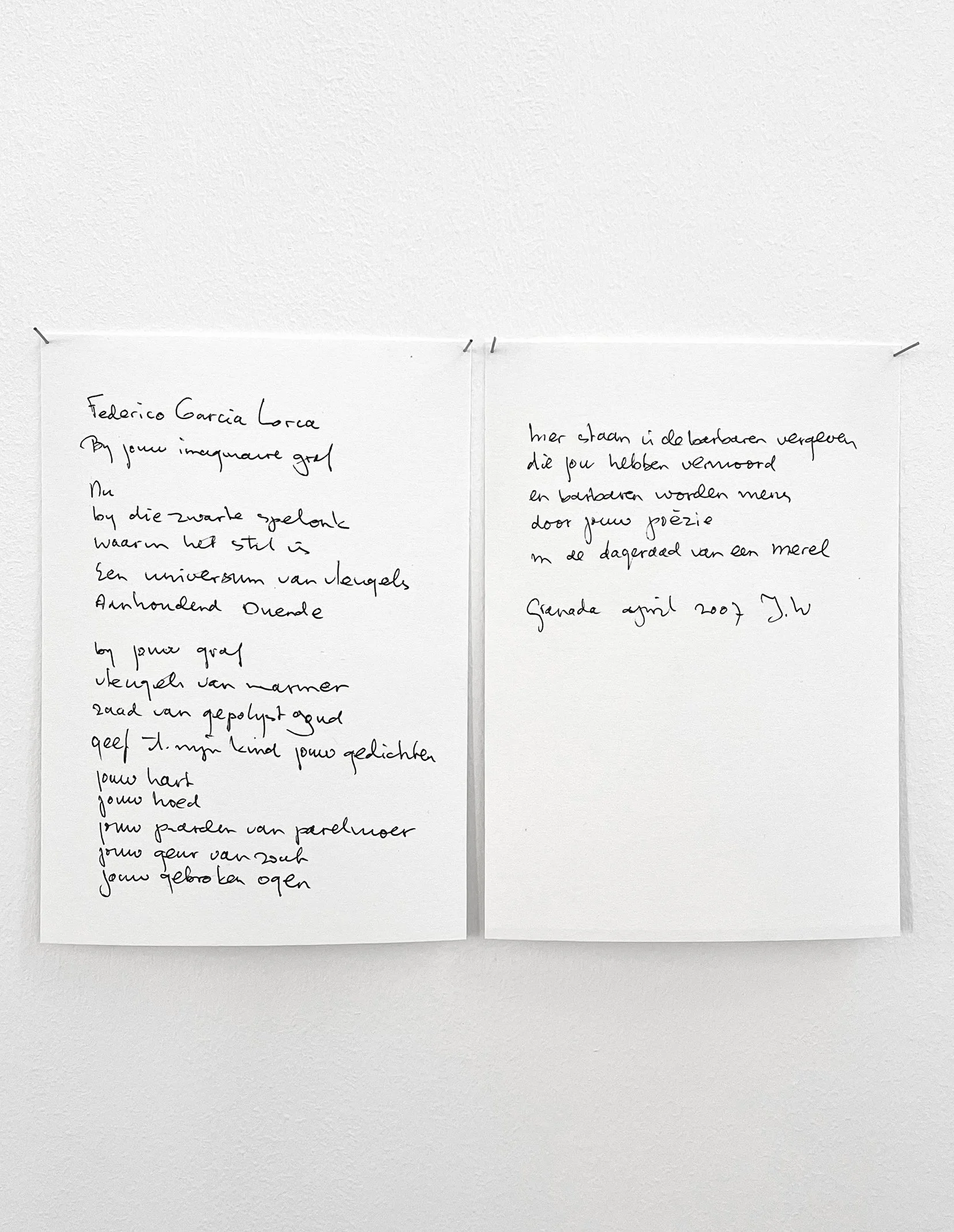
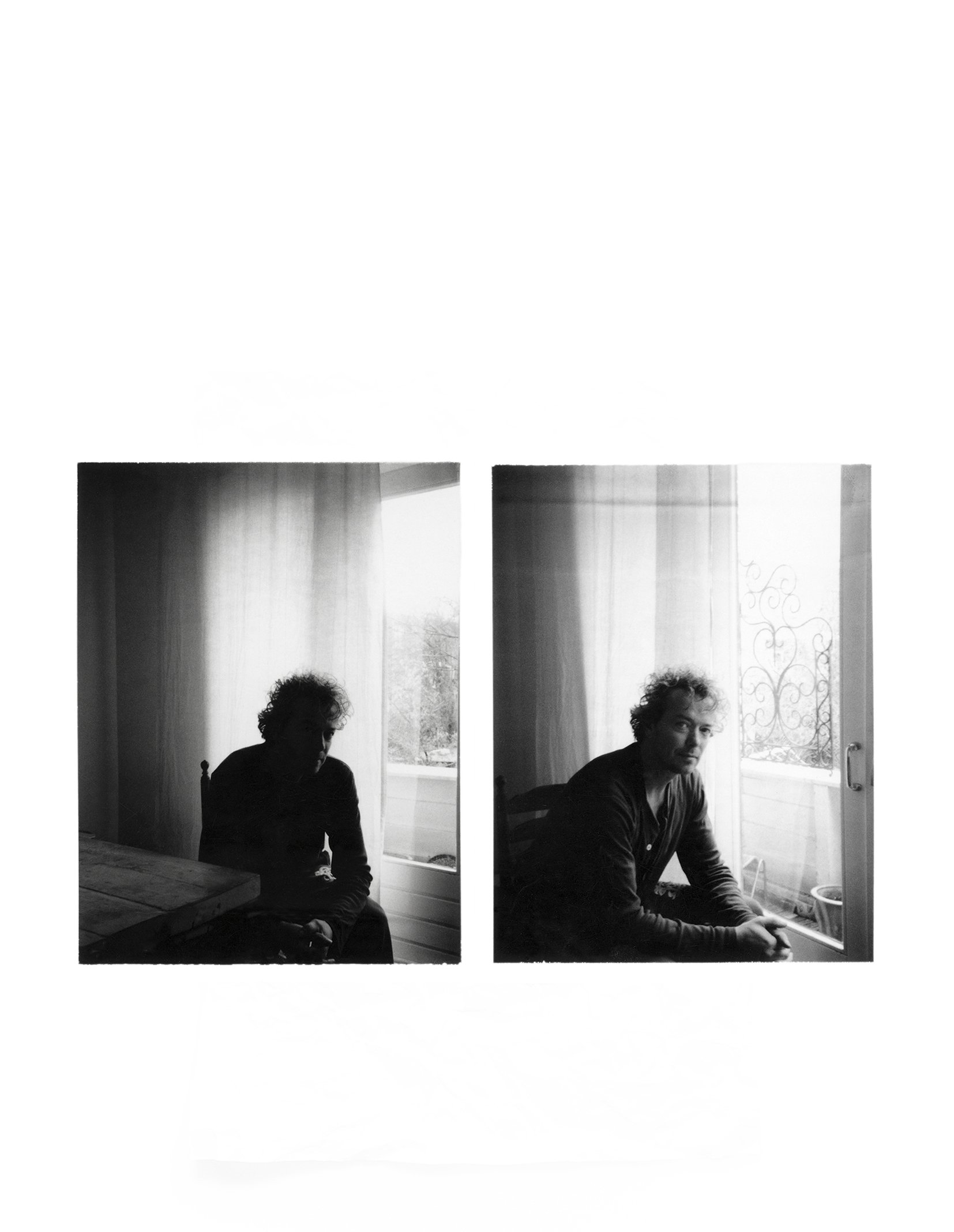
sculptures and photography
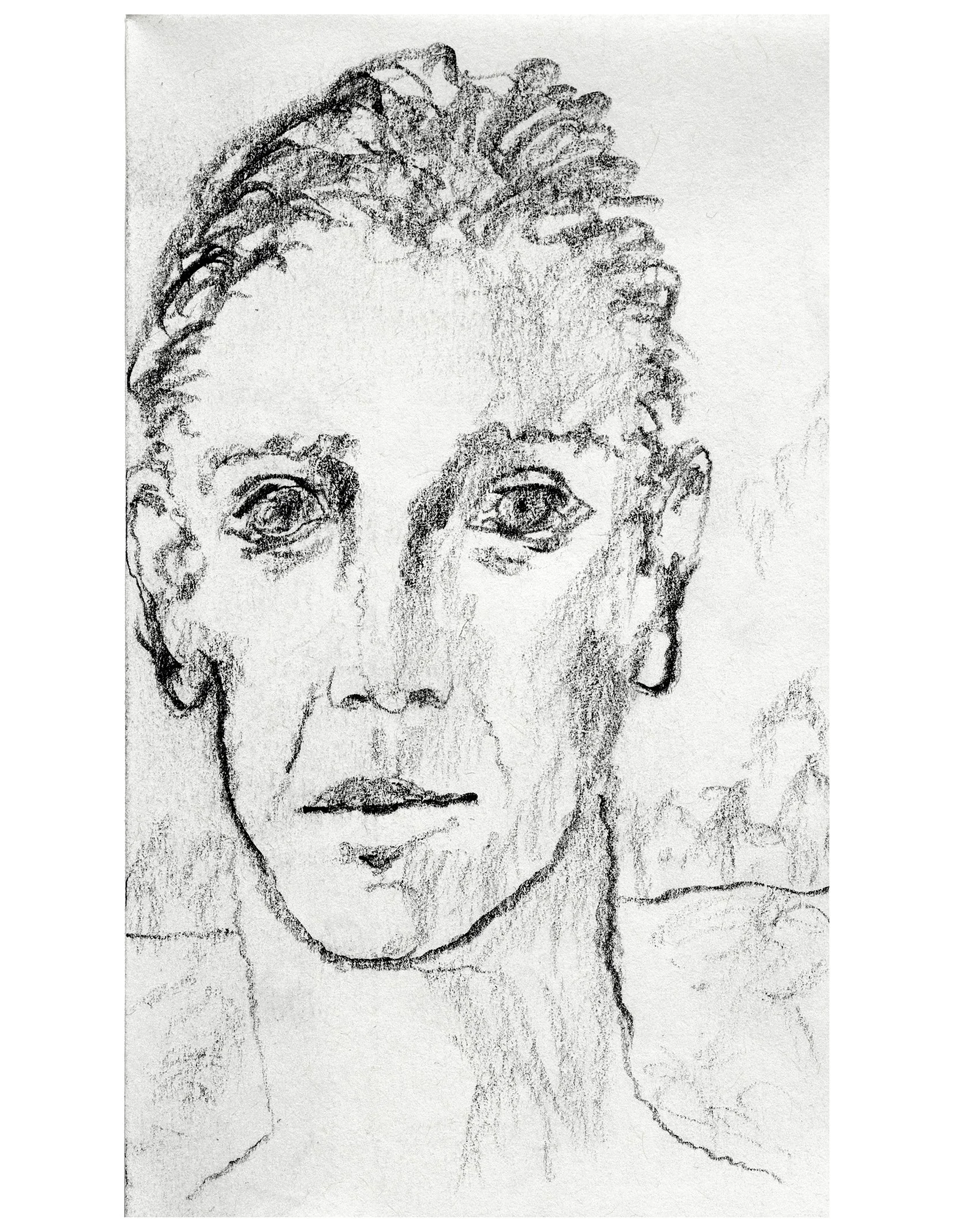
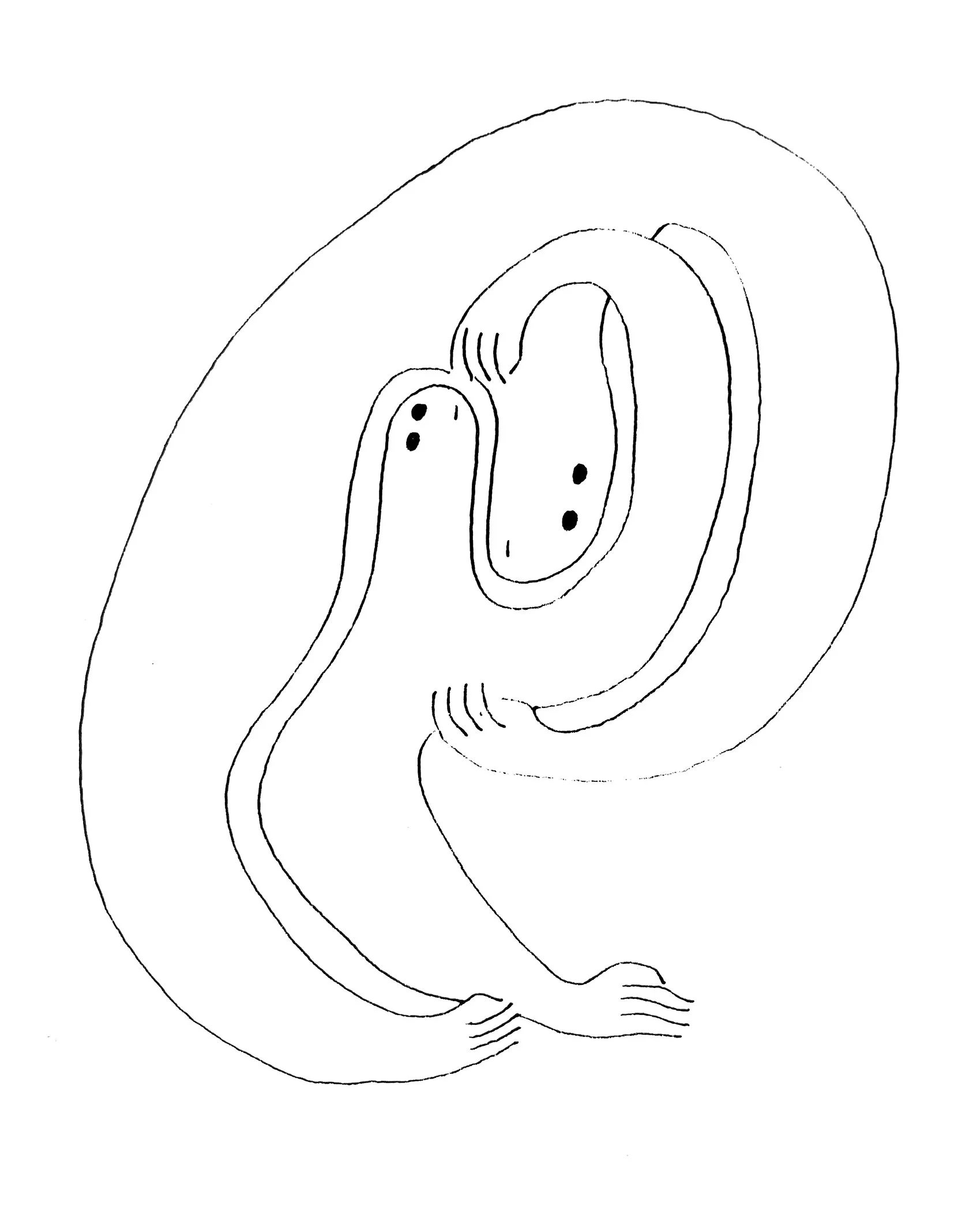
text and drawings