
To enter a world where time has dissolved and life’s noise has fallen silent, seems to be the invitation by Merel Waagmeester. An invitation to step barefoot into the quiet mystery of life within the things that surround us.
To walk barefoot somewhere is to connect with the sensitive, with your vulnerability and your resilience.
You become more alert; your sense of touch connects with your sight and your sense of smell… your body lives more intensely, and for a moment you descend into pure being, far beyond all mental speculations.
Her work arises from a desire to participate through open awareness in what is, and to observe the magic of life in its fleeting manifestations with a sense of wonder.
The eye is drawn into the subtle, meditative contemplation of minimal forms. Images that attest to an inner posture, the Taoist stance of wu wei: acting without action, without force. It is an attitude to life that reverently looks at the beauty of what is, and embraces its fragility, tender and refined.
It is also about intergrating silence as an essential element in the canvas of life - the silence that creates the condition allowing us to be touched by this beauty. Sensitive to the simplicity of existence, sensitive to the life of things around us and in nature.
Waagmeester’s work acquaints us with a form of ecology: an ecology of the eyes, an ecology of sensitivity, as the French naturalist and writer Jacques Tassin describes in his recent essay Pour une écologie du sensible (Odile Jacob, 2020).
According to him, we have become separated from the living world by constantly conceptualizing it, virtualizing it, reducing it to abstractions. This approach becomes a path toward earthing: stepping barefoot onto the earth, making contact, and restoring a place of honor in our lives for simplicity.
Colette Noël
Merel Waagmeester (1981) lives and works in the Netherlands.
She studied Fine Arts at the Utrecht School of the Art and Design (NL) and photography at the Facultad de Bellas Artes, Universidad de Granada, Spain.
Through my work, I aim to touch a space that is free from oppositions, midway between form and emptiness, object and subject, defined and undefined. Images that are both recognizable and touch upon the unfathomable mystery of themselves. A precarious space, the ambience of the in-between’.
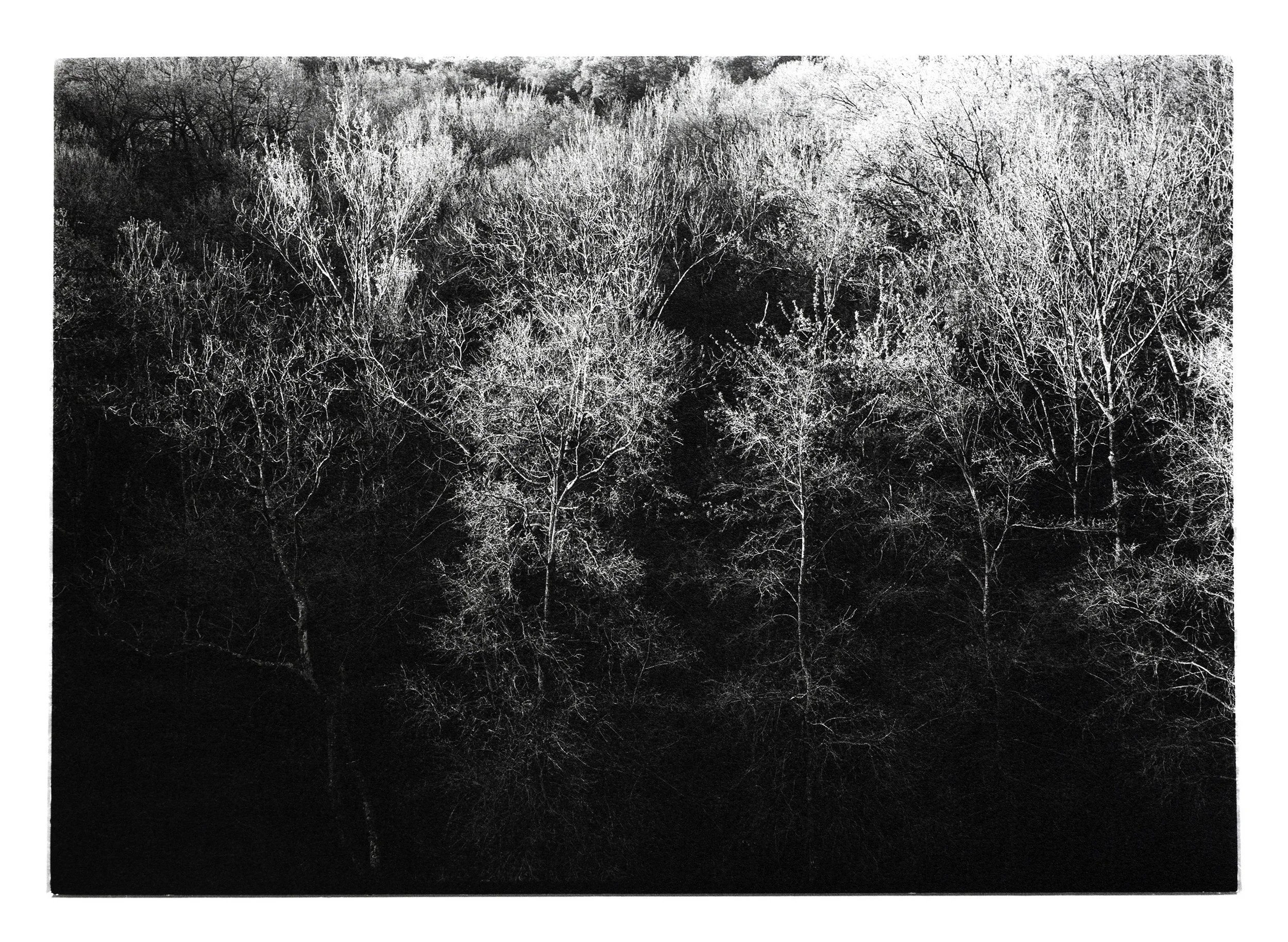
between winter and spring
38 x 55 cm . silver gelatin print
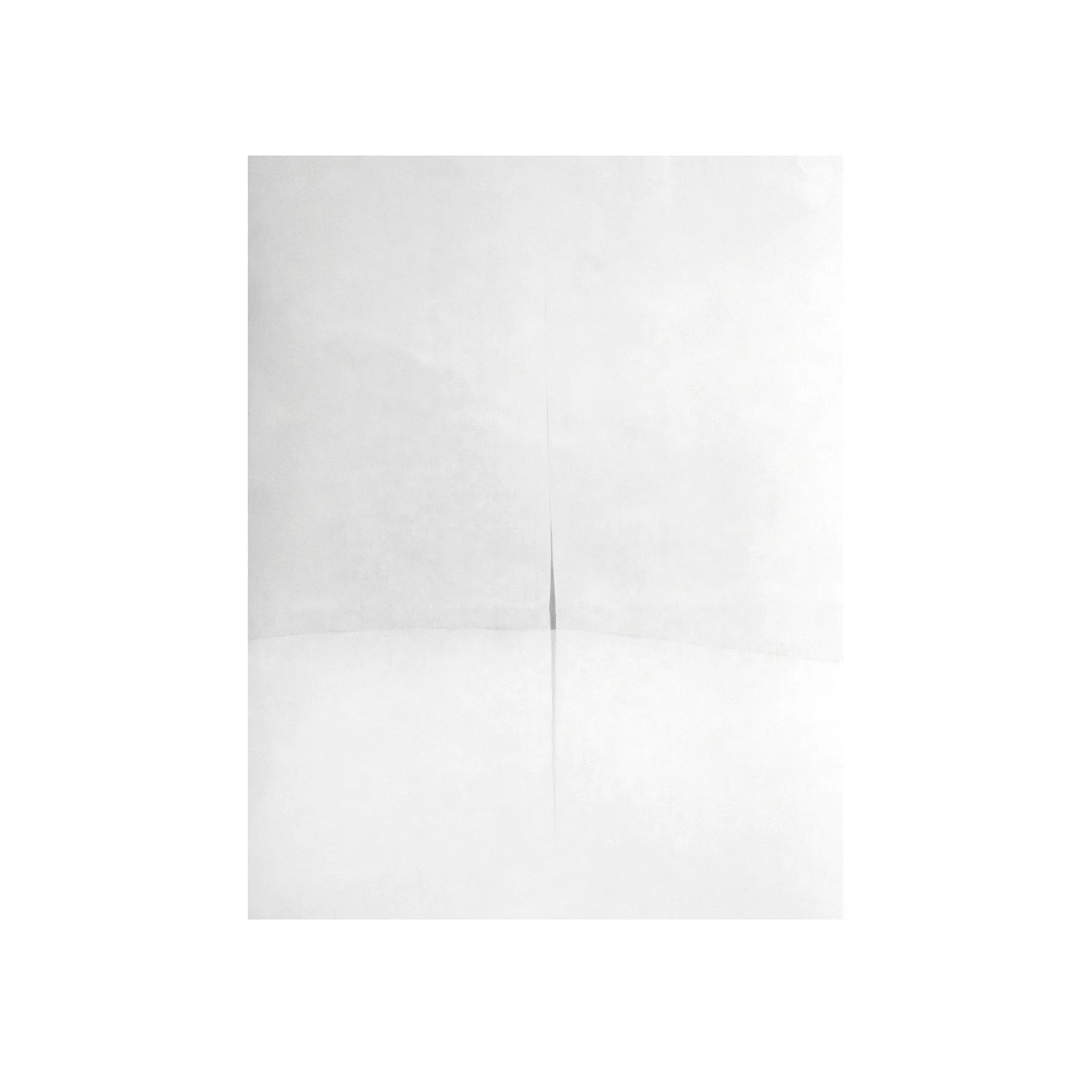
Photogram II
30x40 cm
photogram + pigment print on cotton paper
-